Scenario Overview
Operator transport networks require high-capacity, manageable, and protected transmission at the metro and backbone layers, while simultaneously supporting 5G back-haul and enterprise leased-line wholesale.
Growing traffic from cloud peering, video delivery, and enterprise interconnect demands a flexible, future-proof optical infrastructure.
Customer Challenges
- Limited fiber resources amid exponential bandwidth growth
- across metro and backbone distances
- Low latency, high reliability, full observability
- Multi-vendor interop with existing Huawei/ZTE optical layers
- Flexible bandwidth provisioning and rapid service turn-up
Recommended Architecture
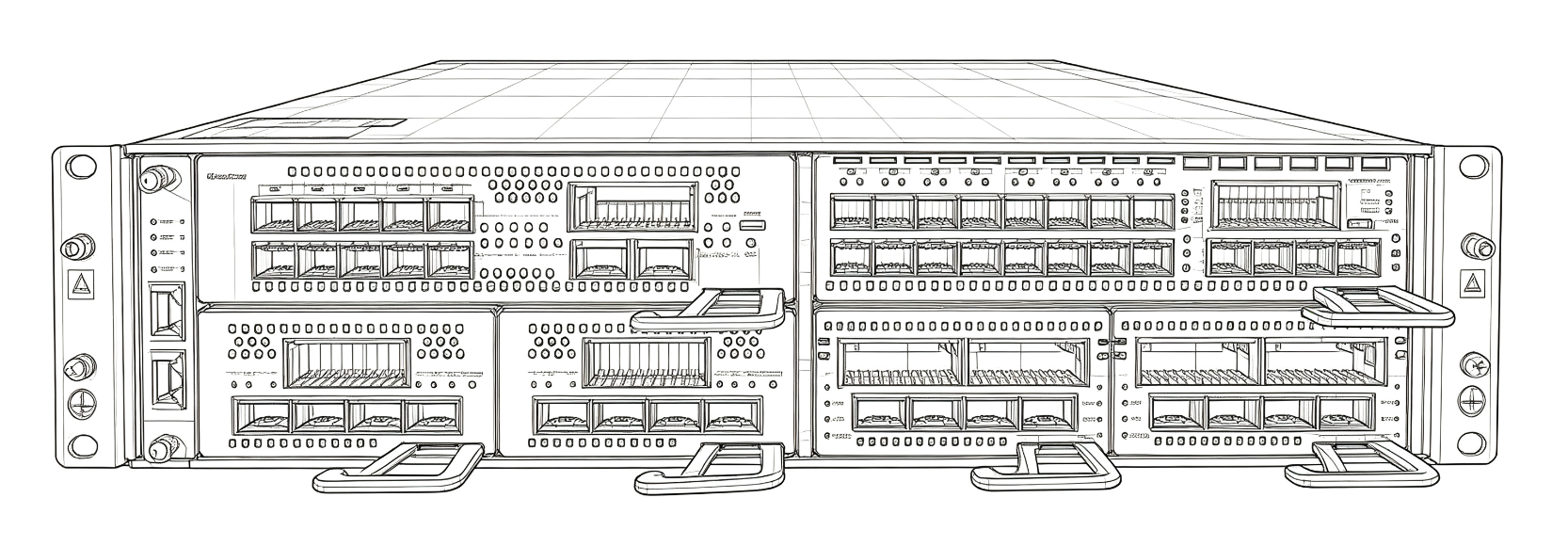
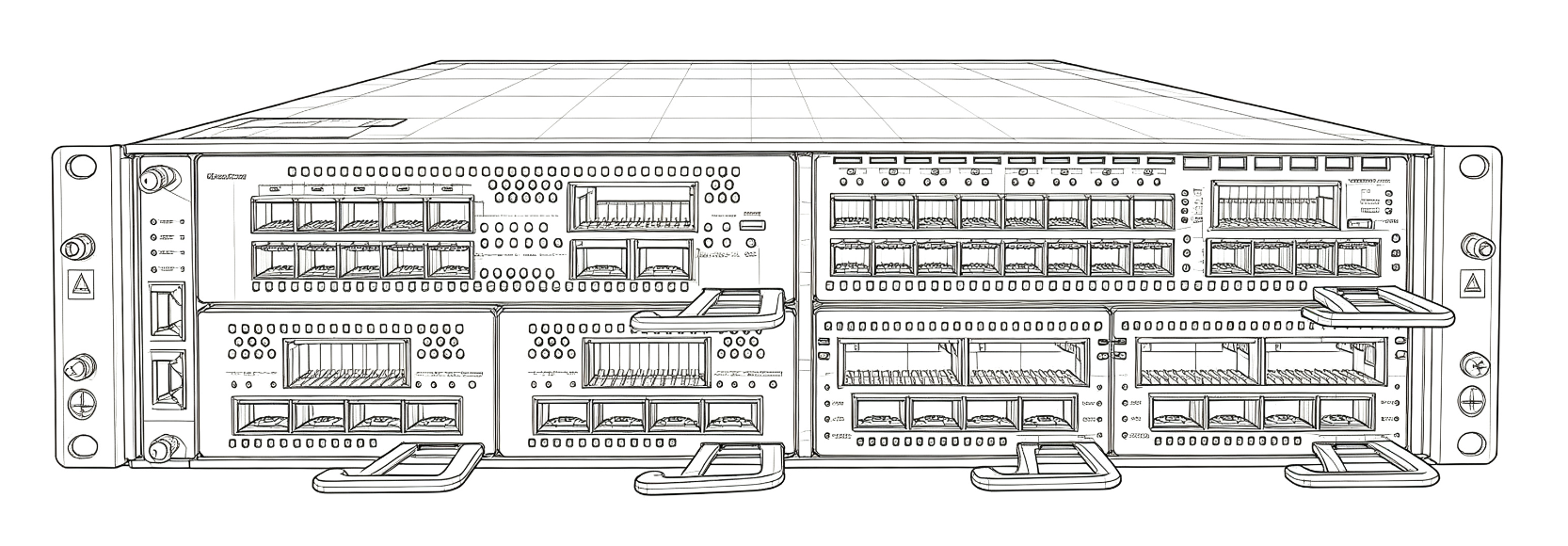
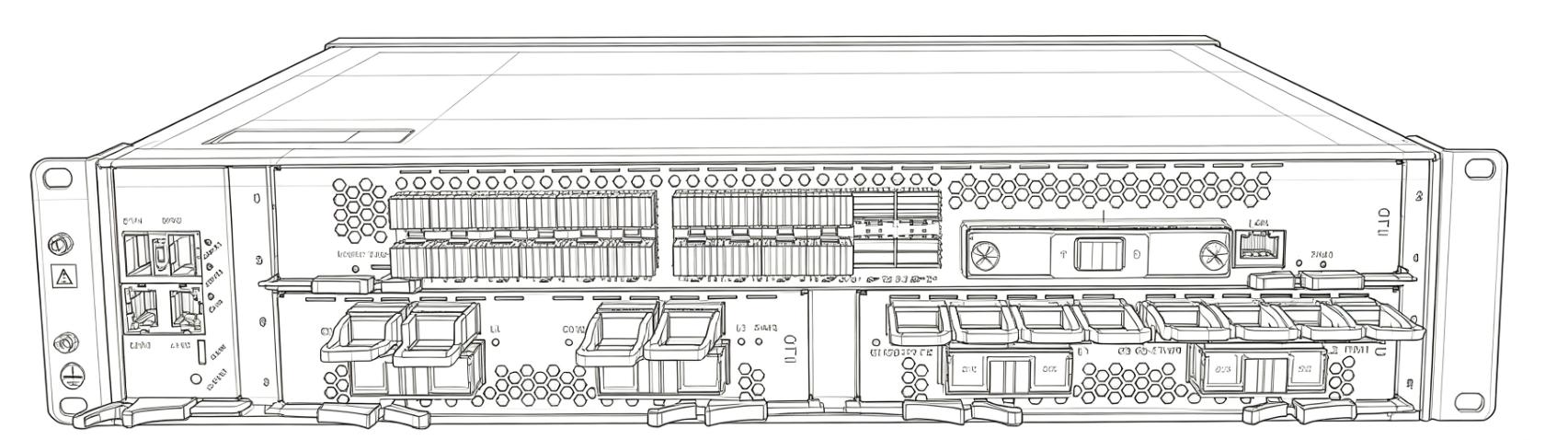
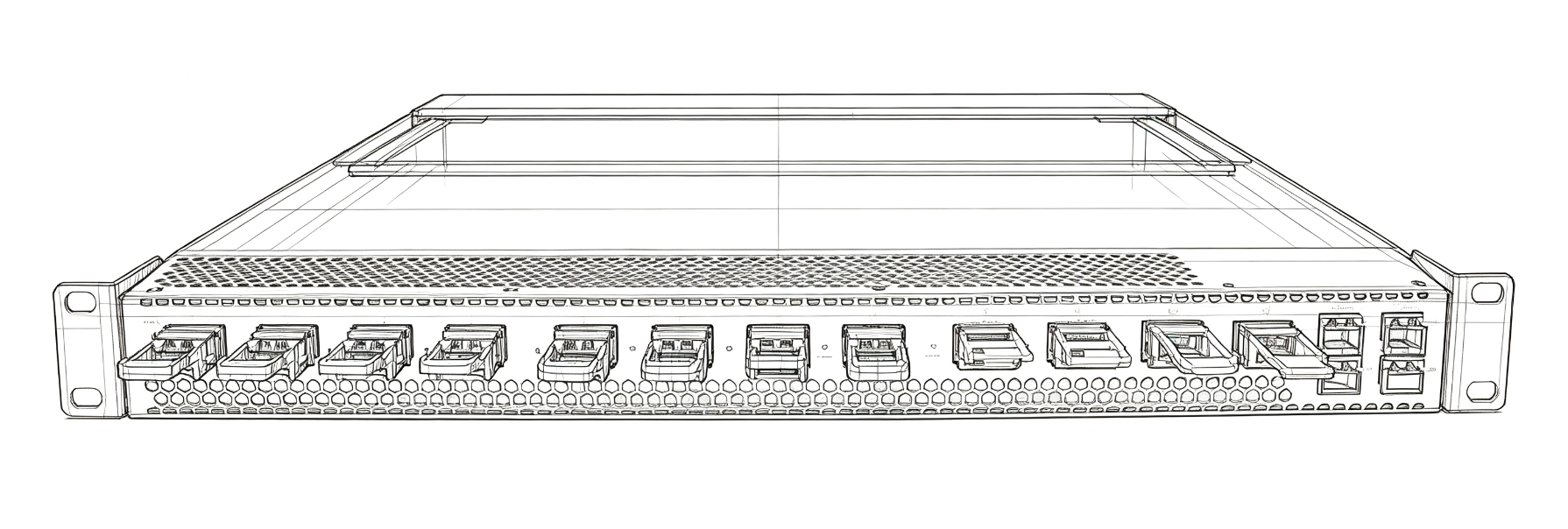
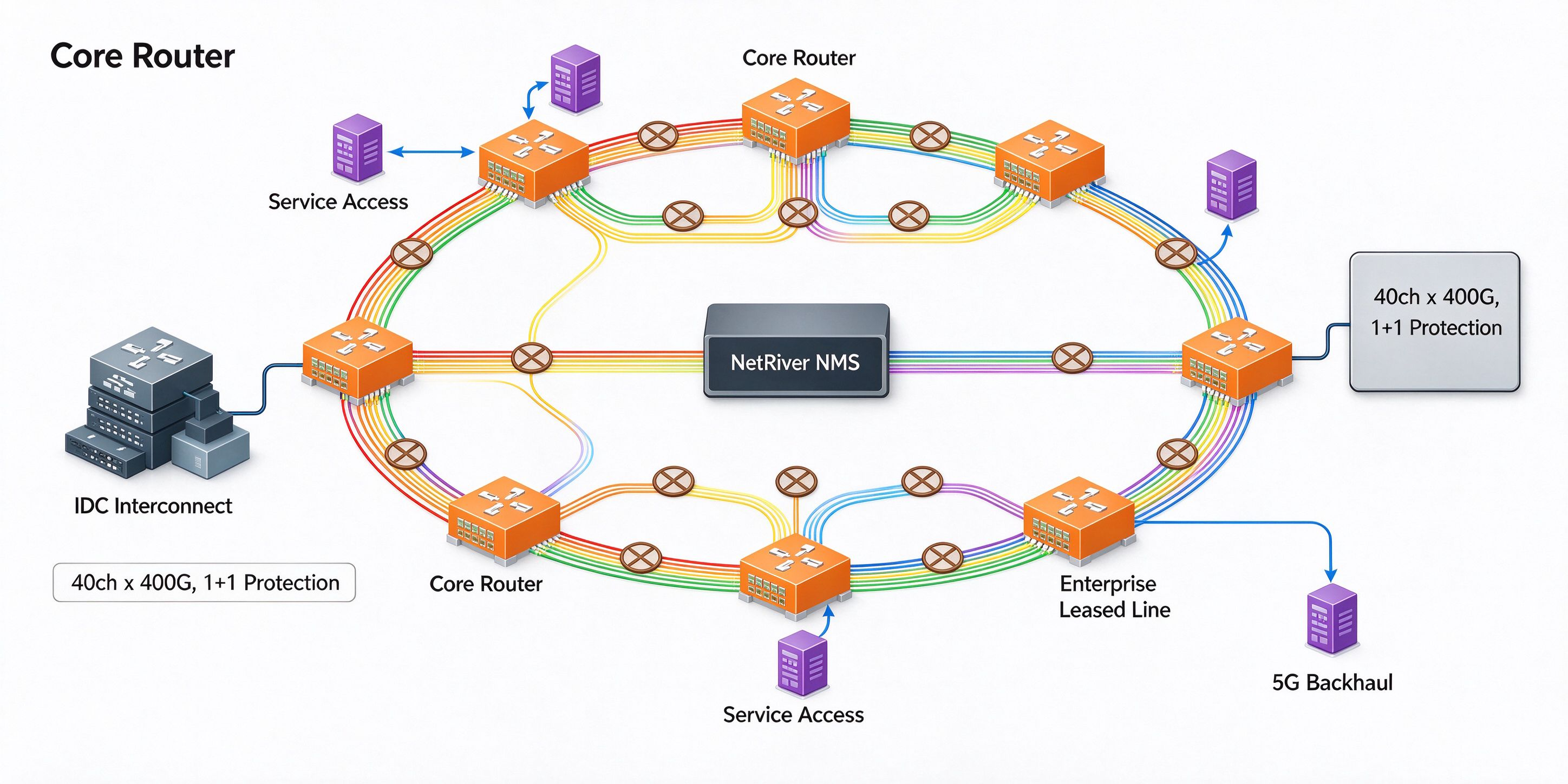
- Core/Backbone Nodes: OTSLink 200G/400G coherent platforms forming a protected DWDM ring
- Service Edge: 5G back-haul, enterprise leased lines, IDC interconnect feeding into the optical layer
- Protection: 1+1 path protection on both equipment and fiber routes
- Management: NetRiver NMS (B/S architecture, SNMP/NETCONF) with web-based GUI
- Multi-vendor Interop: Electrical-layer muxponders transparently connect to third-party optical layers
Key Benefits
High Capacity: Up to 40 channels × 400G per fiber pair (16 Tbps total), scalable as traffic grows
- Long Reach: 200G DP-QPSK reaches up to 1,100 km without regeneration
- Multi-vendor Flexibility: Transparent interop with existing Huawei/ZTE systems, protecting prior investment
- Operational Visibility: Real-time OSNR, pre-FEC BER, LLDP, and Ethernet packet statistics
- Rapid Turn-up: Any-node point-to-point connectivity enables on-demand bandwidth provisioning
- Unified Management: Single pane of glass across multi-vendor networks, reducing OPEX
Next Step
Submit your network parameters (distance, rate, fiber count, equipment model) and the OTSLink engineering team will deliver a tailored design and quote.