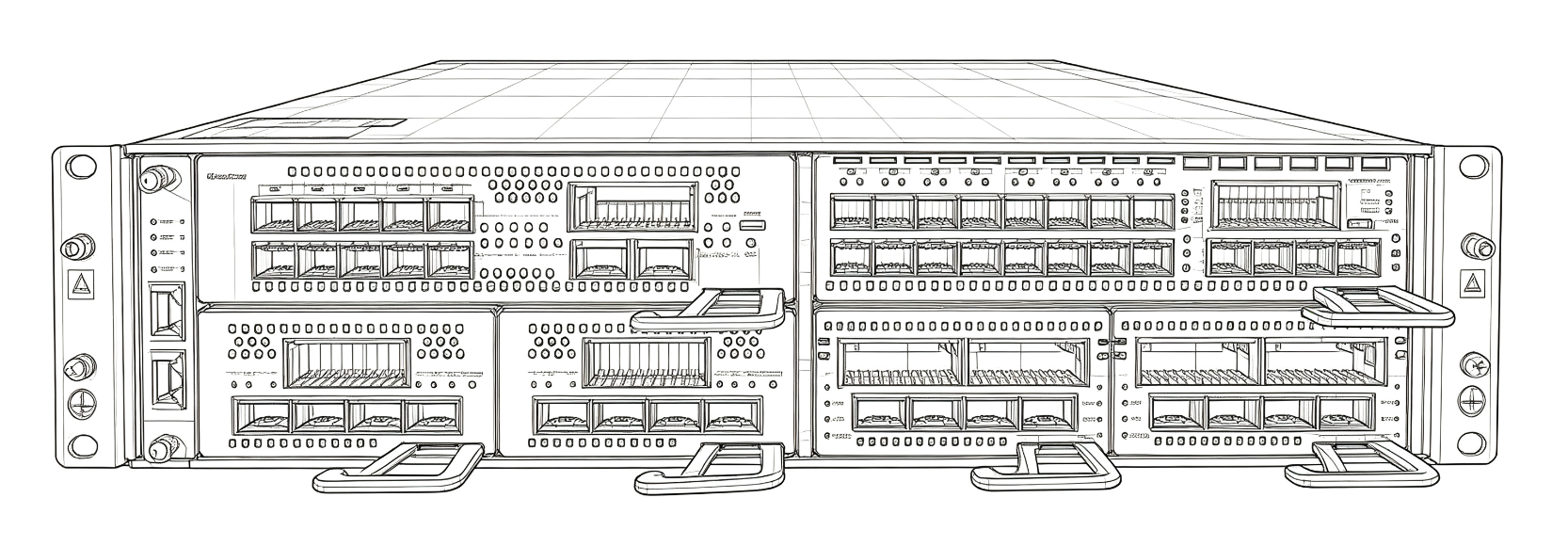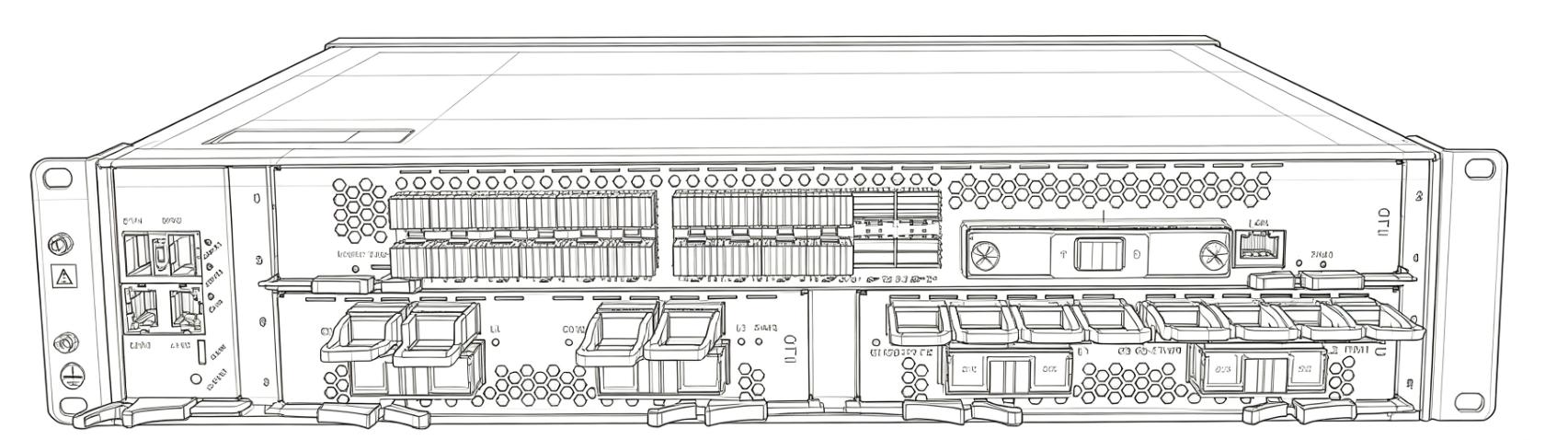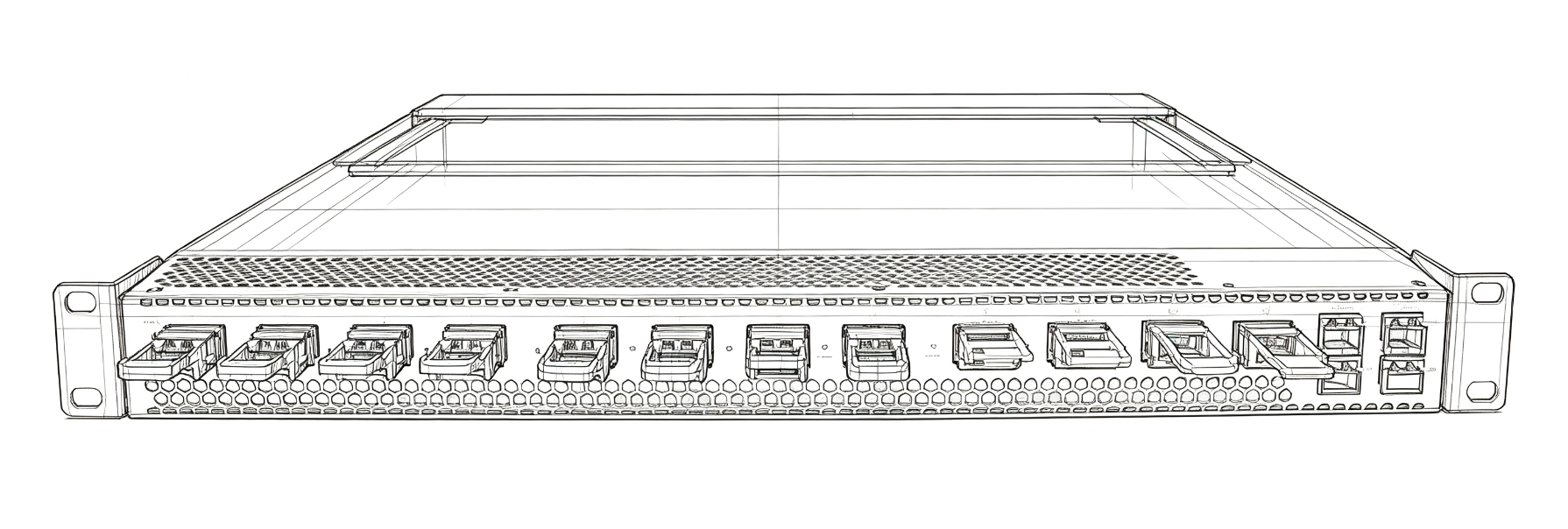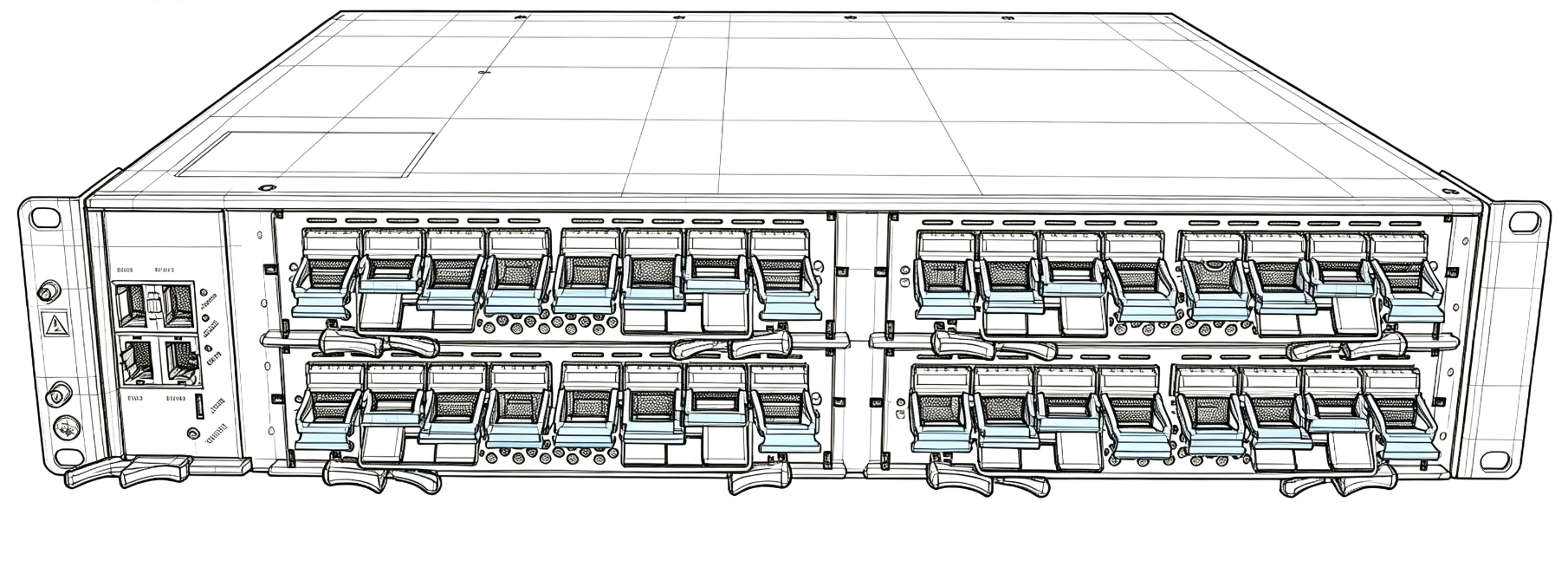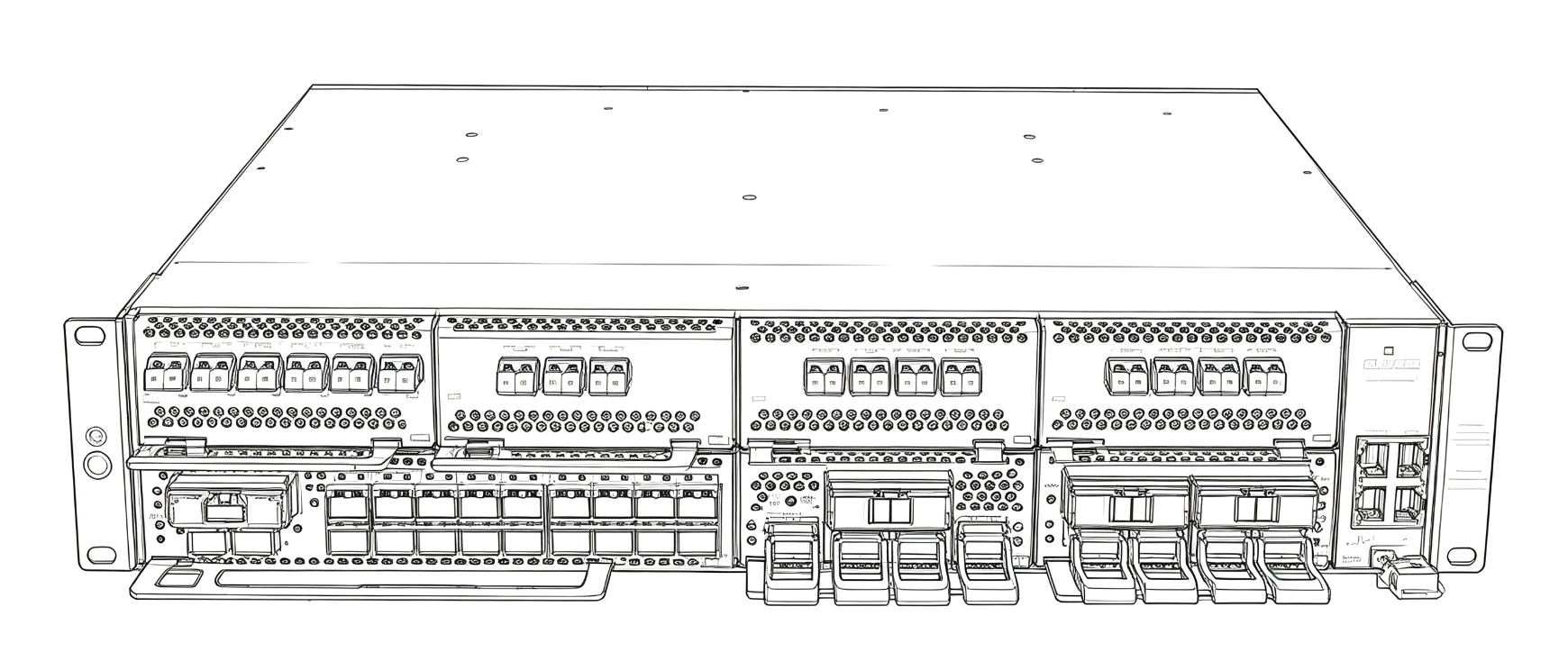
Scenario Overview
In the era of AI, big data and cloud computing, enterprises and hyperscale operators rely on multiple data centers for business continuity, disaster recovery and resource sharing, driving an explosion in east-west traffic.
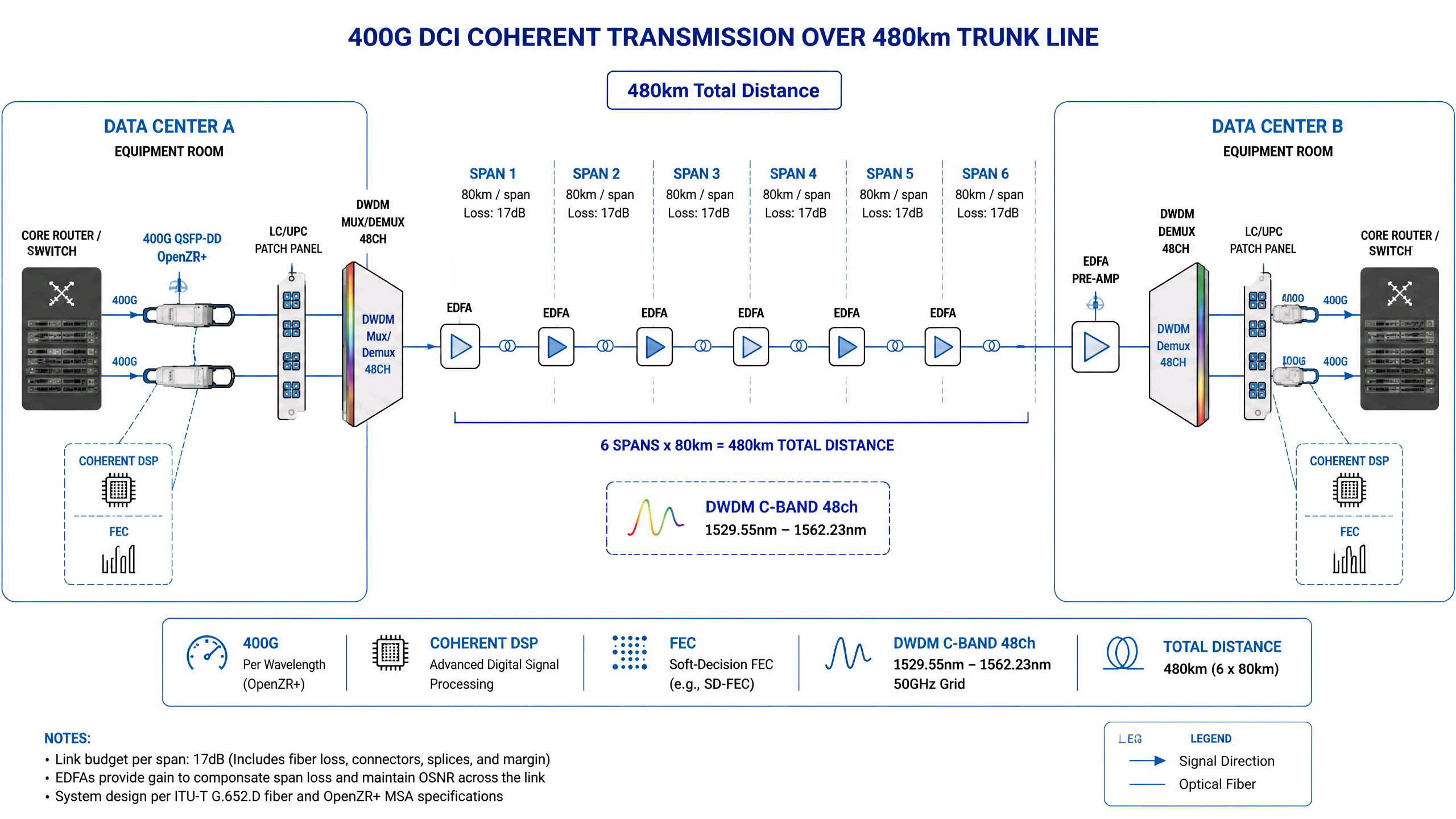
Typical scenario: two data centers 480 km apart, composed of 6 spans of 80 km each, requiring database synchronization, AI/ML model training and real-time DR between them. Legacy transport networks struggle to carry modern 400G workloads efficiently and economically over such distances.
Customer Challenges
• Distance limit: traditional direct-detect optics fail beyond 80 km; establishing a stable 400G link across 480 km without costly electrical regeneration is a major challenge.
• Insufficient link budget: across 6 spans of 80 km (~17 dB each, ~102 dB total) the signal degrades severely and needs precise compensation to keep high OSNR.
• Proprietary complexity: legacy long-haul DCI relies on closed systems hard to integrate with standard routers/switches, causing vendor lock-in and higher OPEX.
• Power & footprint: bulky legacy transport gear consumes excess rack space and power, raising TCO and cooling costs.
• Scarce fiber: single fiber-pair capacity is maxed out; scaling often means re-cabling — slow and expensive.
Recommended Architecture
We recommend an OpenZR+ based 400G coherent DCI solution combining advanced coherent DSP with standard DWDM components for flexibility, performance and cost. Architecture:
• Edge: standard core router/switch plugs directly with 400G QSFP-DD OpenZR+ coherent optics, eliminating a separate transponder chassis.
• Multiplexing: a 48CH DWDM MUX/DEMUX system maximizes single-fiber capacity.
• Link: ITU-T G.652.D single-mode fiber over a total 480 km, split into 6 x 80 km spans.
• Amplification: a high-gain EDFA per 80 km span plus a receive Pre-Amp EDFA; optional OLP delivers <50 ms protection switching.
• Management: OTN-based monitoring for real-time performance and alarm visibility.
• Modulation & FEC: coherent DSP with Soft-Decision FEC (SD-FEC) corrects errors in real time for zero-packet-loss transmission.
Key data: 400 Gbps per wavelength; 480 km reach (6x80 km); ~17 dB per span / ~102 dB total; DP-16QAM adaptive modulation; DWDM C-Band (1529.55-1562.23 nm), 50 GHz grid, 48 channels.
Key Benefits
• Plug-and-play, lower CAPEX: coherent DSP and FEC integrated in the QSFP-DD OpenZR+ module plug straight into routers, removing the transponder chassis and cutting hardware spend and deployment time by over 50%.
• Unmatched long-reach reliability: SD-FEC and coherent DSP actively compensate chromatic and polarization-mode dispersion, keeping an error-free 400G link after ~102 dB of total optical loss.
• Massive scalability, future-proof: 48-channel C-Band DWDM supports up to 48 independent 400G wavelengths on one fiber pair, scaling to 19.2 Tbps (8-96x existing fiber capacity) without new fiber.
• Open standards, vendor-neutral: built on OpenZR+ and ITU-T, fully interoperable with major router/switch vendors, eliminating lock-in and reducing long-term OPEX.
• Low latency, high reliability, monitorable: <50 ms protection switching with real-time OTN visibility for finance DR and AI training workloads.
Network Scenario Topology
Next Step
Submit your network parameters (distance, rate, fiber count, equipment model) and the OTSLink engineering team will deliver a tailored design and quote.