
Target Audience:
Decision-makers and network architects planning Data Center Interconnects (DCI) or enterprise leased lines who are facing fiber exhaustion.
Core Strategy:
Directly address the pain point of "fiber shortage." By comparing traditional grey optics with the modern DCI BOX architecture, this article highlights the trend of "lightweight" and "specialized" solutions, paving the way for your DCI BOX or compact WDM products.
Introduction: Fiber Shortage, What Now?
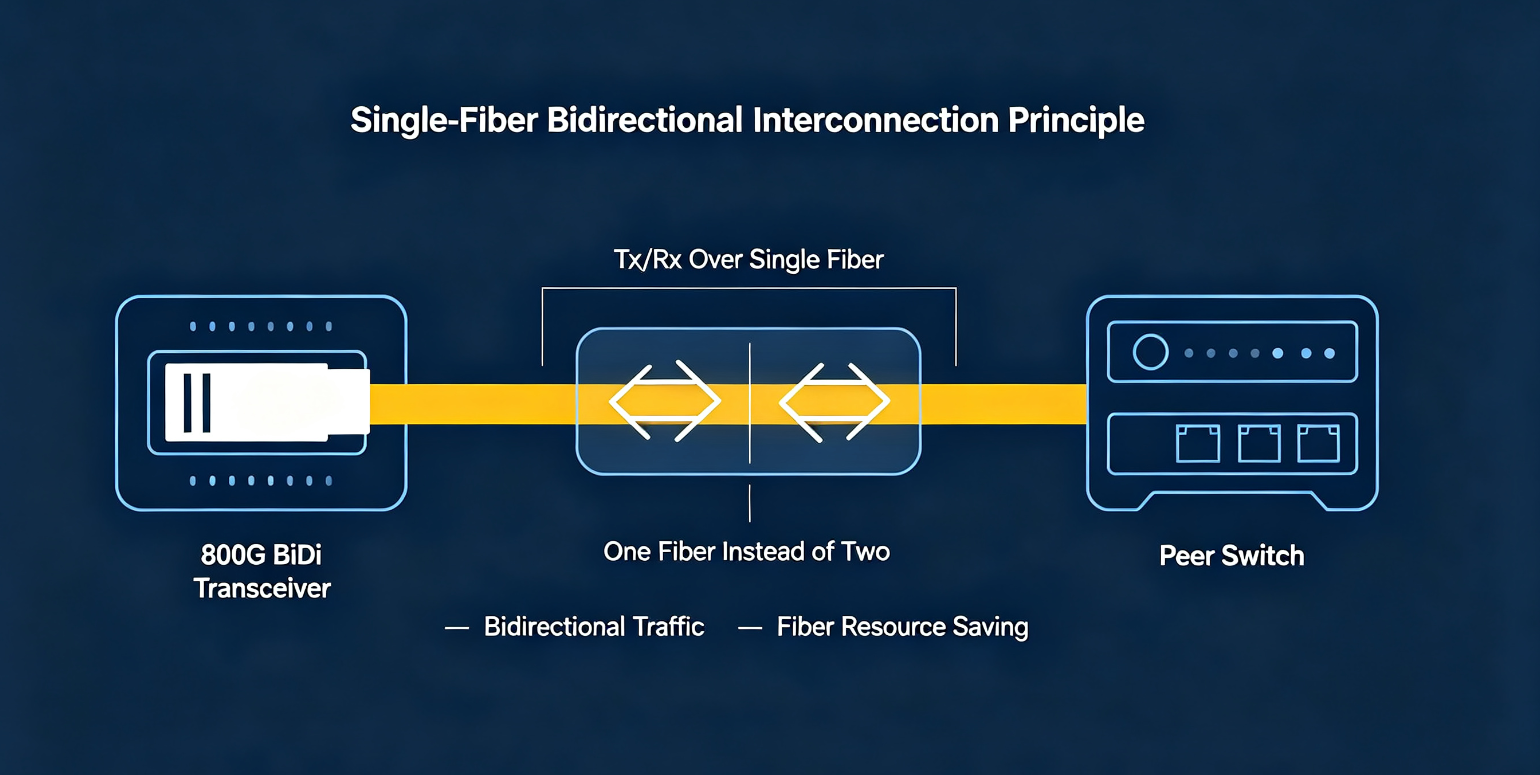
With the surge in AI and cloud computing, many enterprises face the same dilemma: fiber resources between data centers are exhausted, and laying new cables is prohibitively expensive and time-consuming. At this point, you have two choices: pull new fiber or unlock the potential of your existing infrastructure.
Option 1: Grey Optics — Simple but Costly
How it Works: One fiber for one service, a one-to-one connection.
Pros: Simple architecture, no extra equipment needed, plug-and-play.
Cons: Extremely wasteful of fiber resources. If you have ten 100G services, you need to consume 20 fibers (10 for Tx, 10 for Rx). With expensive fiber leases, the Operational Expenditure (OPEX) is incredibly high.
Option 2: WDM (Wavelength Division Multiplexing) — The Scaling Powerhouse
How it Works: Multiplexes different wavelengths of light onto a single fiber. It's like turning a single-lane road into a multi-lane highway.
Pros: Saves massive amounts of fiber. A single pair of WDM devices can transmit dozens or even hundreds of services over one fiber pair.
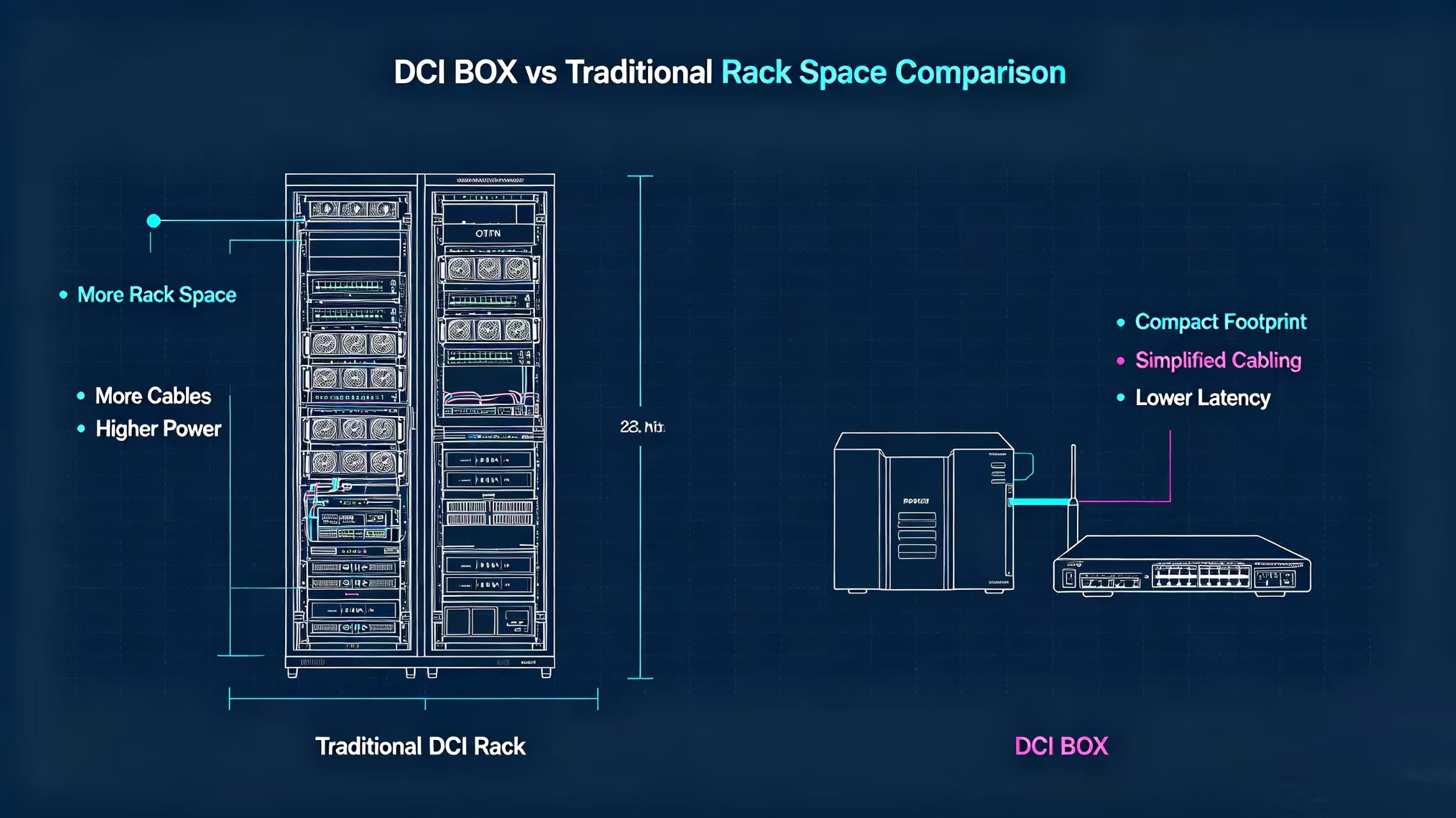
Cons: Traditional OTN equipment is often "big and bulky," taking up significant rack space (12U+), consuming high power, and requiring complex configuration. For data centers needing simple point-to-point connectivity, this is overkill.
The Evolution: DCI BOX — Built for the Data Center
To address the pain points of traditional OTN, the DCI BOX (Data Center Interconnect BOX) was born:
Compact & Efficient: Designed for tight data center spaces, typically 1U or 2U in height, offering flexible deployment.
Automated Operations: Ditches the complex configuration of traditional telecom gear, supporting zero-touch provisioning for simple, plug-and-play setup.
Ultimate Cost-Effectiveness: Strips away unnecessary telecom-grade redundancy, focusing purely on high-capacity, low-latency data transmission.
💡 Selection Recommendations:
If fiber is abundant and services are minimal, Grey Optics remains viable.
For large-scale bandwidth demands, WDM technology is a must.
In DCI scenarios, the lightweight DCI BOX is gradually replacing bulky traditional OTN as the top choice for cost reduction and efficiency gains.
What Challenges is Your Network Facing?
Optical communication is evolving rapidly, and there is no one-size-fits-all solution. Which scaling solution do you prefer in your deployments? Or what tricky problems have you encountered in fiber-constrained metro networks? Share your insights in the comments below—let’s discuss and learn from fellow network engineers worldwide