From WDM to DCI Box: A Complete Retrospective of a Paradigm Restructuring in Optical Transport
The underlying technologies of data center interconnects have undergone a silent yet profound reconstruction over the past decade—from integrated WDM systems in the carrier era to open and decoupled architectures driven by cloud vendors, and then to compact DCI boxes and pluggable ZR optical modules. This article uses these five evolutionary stages as a framework to trace the changes this technology has undergone, the achievements it has made, and the distinct developments it has brought to different fields.
Introduction: Why DCI Needs a Paradigm Restructuring
Wavelength division multiplexing (WDM) technology emerged in the 1990s, initially serving telecommunications backbone networks—multiplying capacity through multiple wavelengths on a single optical fiber and combining it with EDFA optical amplifiers to achieve ultra-long-distance transmission. By the early 2010s, DWDM systems had become the backbone of the global Internet's long-distance transmission.
But data center interconnect (DCI) is another matter.
Traditional WDM equipment is designed for telecom operators: large rack size (multiple RUs or even multiple subracks), complex configuration (requiring specialized optical transmission engineers), long deployment cycles (weeks), and high costs (millions per system). When internet companies began building multiple data centers on a large scale and needed to interconnect them, this equipment system designed for telecom scenarios experienced a fundamental supply-demand mismatch:
Mismatch in operational expertise: Data center networks are maintained by IT engineers, but traditional WDM equipment requires expertise in optical transmission.
Deployment efficiency mismatch: Data center services are iterated on a daily basis, but WDM system deployments are measured in weeks.
Cost structure mismatch: Data center bandwidth demand is increasing by more than 30% annually, but leased lines from operators have high monthly fees and poor flexibility.
Space and power consumption mismatch: Data center server rooms are extremely valuable, but traditional WDM equipment is bulky.
These mismatches have driven a paradigm shift from WDM to DCI Box. According to Omdia, direct purchases of DCI equipment were only $1 billion in 2014, but have grown to $4 billion by 2024—a fourfold increase in ten years, driven by a complete rewrite of the technical architecture.
Phase 1: Direct migration of traditional WDM to DCI (2010-2014)
Starting point: Copying integrated WDM systems
Early data center interconnects directly adopted integrated WDM systems from carriers. In 2014, 100% of DCI equipment procurement was done through integrated WDM systems—the only available technology option at the time.
The typical architecture of an integrated WDM system consists of three tightly coupled layers:
Client-side interface: Handles electrical signals from routers/switches.
Optical line side: The electrical signal is modulated onto an optical carrier of a specific wavelength, and then multiplexed/demultiplexed via DWDM.
Optical Amplification and Monitoring: EDFA Amplification, Dispersion Compensation (DCM), Optical Performance Monitoring
In a closed system with three layers integrated within the same vendor, the transponder and optical line system (OLS) are inseparable. This means that if you purchase a WDM system from vendor A, you must also purchase vendor A's transponders, amplifiers, multiplexers/demultiplexers, and management software; they cannot be mixed and matched.
Pain points revealed
Bilibili's basic engineering team later documented the typical dilemmas of this stage: metro DCI and long-distance DCI "are ultimately based on DWDM technology to achieve reasonable multiplexing of optical signals", but traditional systems use DCM dispersion compensation modules - which were designed for the single-wavelength 10G era, and "cannot meet the surge in traffic carrying capacity when facing 100G/400G traffic".
In its DCI white paper, Huawei summarized the challenges of this stage into three points: limited fiber optic and data center resources, difficulties in expansion, and complex operation and maintenance. These pain points are not inherent defects in WDM technology, but rather incompatibility that arises when system designs designed for telecommunications scenarios are forcibly applied to data center scenarios.
Phase Two: The Rise of Open and Decoupled WDM (2015-2020)
Breakthrough for cloud vendors
After 2015, hyperscale cloud vendors, represented by Google, Microsoft, and Meta, began to promote an "open decoupling" movement. The core idea is to separate the tightly coupled three layers in the traditional WDM system—the transponder, optical line system, and pluggable optical module can be purchased separately from different vendors.
The essence of this change is the introduction of two principles: "openness" and "decoupling".
Open: Define standardized interfaces (such as OpenZR+, OpenROADM MSA), and devices from different vendors follow a unified specification, making them interchangeable.
Decoupling: Separate procurement of the optical layer (multiplexers/demultiplexers, amplifiers) and the electrical layer (transponders/digital coherent processing).
By 2020, open and decoupled WDM accounted for nearly 50% of DCI direct procurement, while integrated WDM began to decline continuously.
The Triple Changes Brought About by Decoupling
The procurement model is changing. Cloud vendors are no longer purchasing complete systems, but rather breaking them down into smaller, on-demand purchases: first buying optical line systems to build the basic optical layer, and then gradually adding repeaters according to business needs. In 2020, repeater procurement was the main focus, but by 2024, cloud vendors began to increase their purchases of optical line systems (accounting for 25% of the de-aggregated system), and this proportion is expected to reach 40% in the next three years—meaning that optical layer infrastructure is being "built in advance and filled in on demand."
The cost structure has changed. Open standards have broken vendor lock-in, and repeater prices dropped significantly between 2015 and 2020. Cloud vendors can now buy amplifiers from vendor A, repeaters from vendor B, and management software from vendor C, driving down procurement costs through competition.
The operation and maintenance model is changing. The decoupled system requires a unified management and control plane. SDN controllers (such as ONOS and the open-source TAPI interface) are beginning to replace vendor-specific network management systems, enabling unified orchestration and automated deployment of devices from multiple vendors. This is the first step for DCI to shift from "device operation and maintenance" to "software operation and maintenance".
Technological foundation: The maturity of coherent pluggable optical modules
The feasibility of open decoupling relies on the maturity of a key technology: the Digital Coherent Optical Module (DCO). From CFP to CFP2-DCO, coherent processing (DSP + coherent detection) has been integrated into a pluggable module form. This means that the transponder function is no longer a rack-mounted board, but a hot-swappable module—a common technological prerequisite for subsequent DCI Box and ZR solutions.
Phase 3: The Birth of the DCI Box (2019-2023)
Demand-driven: From cloud vendors to enterprises
Open and decoupled WDM solves the cost and flexibility issues for cloud vendors, but it introduces new complexity—requiring the management and integration of multiple independent components. For non-cloud vendor users such as financial institutions, governments, and large enterprises, this complexity remains excessive.
When Huawei launched the OptiXtrans DC908 in 2020, it precisely targeted this market gap: replacing the large cabinets of traditional WDM systems with a compact device, allowing IT personnel to deploy and maintain DCI networks without needing expertise in optical transmission.
Technical features of DCI Box
The DCI Box is not simply a miniaturized WDM device, but rather an architectural reconstruction tailored to DCI scenarios. Products such as the Keguang OPTN8600-DN920 and Ruiscom DCI-BOX embody the following design principles:
Optoelectronic integration. Within a 2RU or even 1RU chassis, both electrical layer processing (OTN cross-connect/ODUflex) and optical layer modules (multiplexers/demultiplexers, ROADMs, EDFA amplifiers, OTDRs) are integrated. Functions that traditional WDM requires multiple independent subracks to achieve, are accomplished in a single DCI box. Keguang products support 6.4Tbps processing capacity within a 2RU chassis, while integrating ROADMs and optical amplifiers to form an end-to-end DWDM transmission solution.
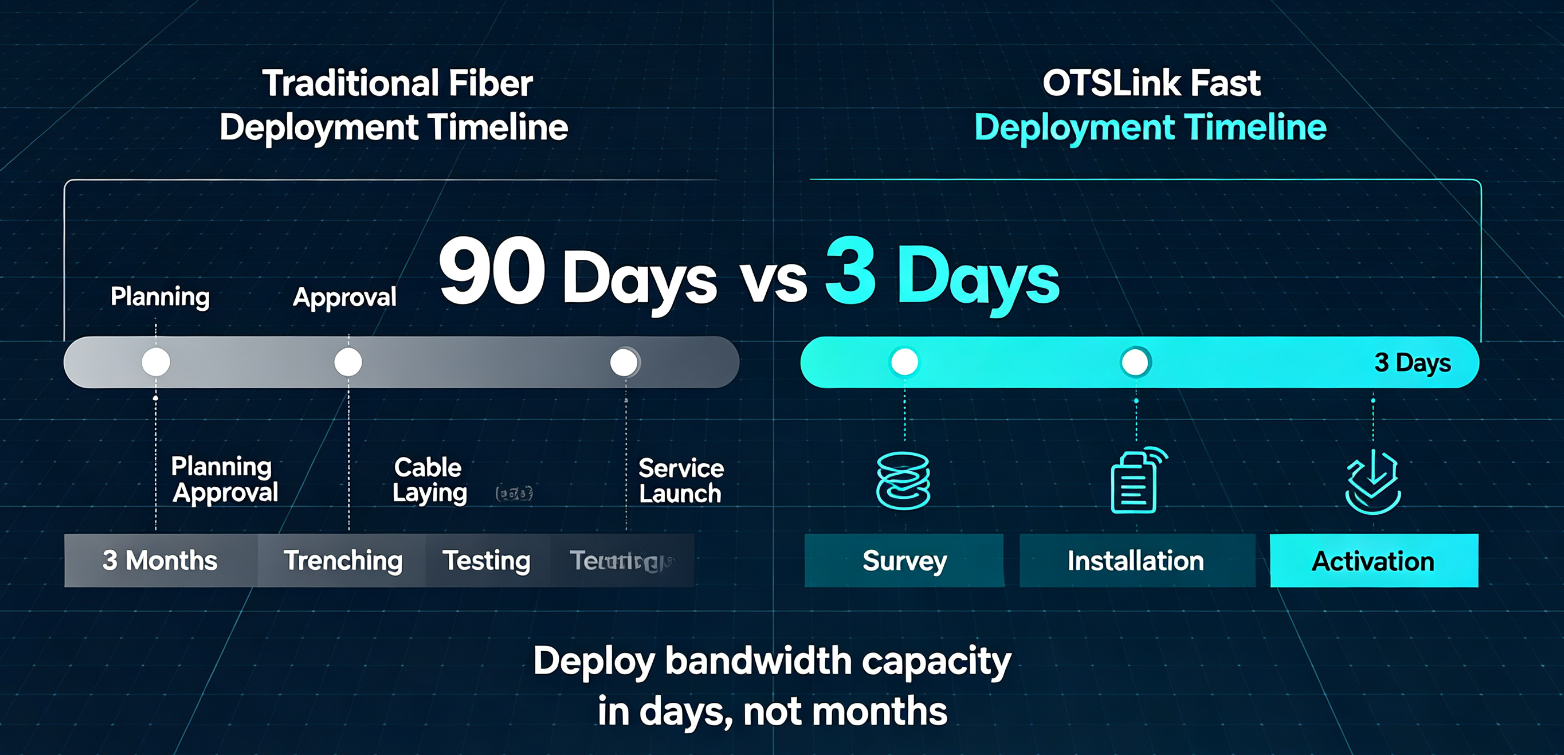
designed for native data center use. It features a front-to-back airflow design, AC/DC power supply, and a standard 19-inch rack size, allowing it to be deployed directly alongside servers in the data center—unlike traditional WDM equipment which requires a dedicated transmission room. This means the deployment location of the DCI network has moved from the "transmission room" to the "IT room," reducing the deployment cycle from weeks to days.
Zero-configuration intelligent operation and maintenance. DCI boxes generally adopt SDN-based design concepts, providing an open software architecture to achieve automatic fiber optic connection and optical path configuration (Auto-commissioning). IT personnel can activate services through a web interface or API without manually adjusting parameters such as optical power and dispersion compensation. Huawei's DCI white paper defines this transformation as "from reactive operation and maintenance to predictive operation and maintenance"—achieving sub-health prediction and accurate troubleshooting through real-time parameter collection and intelligent algorithms.
Ultra-low power consumption. Based on 400G coherent DSP and photonic integration technology (such as the CFP2-DCO module), the DCI Box can operate at a power consumption as low as 20W per 100G—a reduction of more than 50% compared to 40-60W per 100G for traditional WDM systems. For data centers with limited power resources, this metric directly determines the upper limit of deployable bandwidth.
The core difference between DCI Box and traditional WDM
Dimension Traditional integrated WDM DCI Box Equipment form Multiple subracks, multiple RUs, requires a dedicated data center 1-2RU, can be co-located with server Optoelectronic architecture Optical and electrical layer separation subframe Unified integration of optoelectronic layer Deployment cycle Several weeks (requires commissioning by optical transmission engineers) Several days (automatic debugging with zero configuration) Operation and maintenance methods Vendor-owned private network management, reactive SDN open architecture, predictive Power consumption 40-60W per 100G 15-20W per 100g Applicable users Operators Cloud vendors, enterprises, financial institutions, and governments
This table reveals a key shift: DCI Box lowers the barrier to entry for using optical transmission technology from "requiring optical transmission experts" to "being able to operate it by an IT engineer." This lower barrier has directly spurred the trend of self-built DCI networks—more and more enterprises are shifting from leasing operator leased lines to building their own DCI networks.
Phase 4: ZR Pluggable Optical Modules and IP over DWDM (2021-2024)
Paradigm Shift: Routers as Optical Transmission Devices
If the DCI Box represents the miniaturization and integration of WDM systems, then the ZR optical module represents a more radical reconfiguration: directly inserting the WDM repeater function into the optical module slot of a router/switch.
400G ZR/ZR+ is a standardized coherent optical module specification defined by the OIF, encapsulated in QSFP-DD form factor, and can be directly inserted into the ports of routers or switches that support this specification. This means that routers no longer need to connect to external WDM repeaters via short-range optical modules—the router itself is the endpoint of the WDM system.
This architecture is called "IP over DWDM" (IPoWDM): IP networks and optical networks operate under the same control plane, run the same routing protocols, and maintain a common topology database. IP devices and optical network devices are visible to each other, participate in routing together, and achieve unified traffic engineering.
The disruptive impact of the ZR solution
By 2024, routers/switches (with ZR optical modules) accounted for 25% of direct DCI procurement, and the proportion of open decoupled WDM continued to increase, while integrated WDM continued to decline. The impact of this change is structural:
The separate repeater layer is eliminated. In the traditional DCI architecture, the data path is "router → short-distance optical module → optical fiber → WDM repeater → DWDM line". The ZR solution compresses this to "router (with built-in ZR module) → DWDM line", eliminating the need for separate repeater devices and corresponding optical fiber patch cords. This reduces the number of device nodes, lowers latency, and simplifies operation and maintenance.
Pluggable Optical Line Systems (POLS) are further simplified. By 2025-2026, POLS technology will integrate amplification functions into the transceiver, offering plug-and-play functionality. Paired with 800G ZR/ZR+ optical modules, POLS can support 6.4Tbps bidirectional traffic over a distance of 120 kilometers. This is equivalent to "modularizing" even the largest optical amplifier in a traditional WDM system.
Accelerating the deployment of silicon photonics solutions. In March 2026, OpenOptics MSA released a WDM standard for data center interconnects, supporting 32-channel single-fiber interconnects, aiming to reduce costs and accelerate the deployment of silicon photonics solutions. This standard, driven by hyperscale cloud vendors, further compresses the closed space of traditional WDM vendors.
The coexistence of ZR and DCI Box
It's worth noting that the ZR solution does not completely replace the DCI box. The two complement each other in different distances and scenarios:
The ZR solution is suitable for short-to-medium range (10-120km) metropolitan area DCI, with router ports directly outputting wavelength division multiplexing (WDM) signals, allowing for extremely simple deployment.
DCI Box is suitable for medium to long distances (120-600km+) and scenarios requiring optical layer scheduling (ROADM, OCh protection), as well as enterprise users (scenarios that do not use large-scale routers).
In actual deployments, many DCI networks adopt a hybrid mode: the metropolitan area segment uses the ZR scheme for direct connection, while the long-distance segment uses DCI Box or open decoupling WDM.
Phase 5: AI Computing Power Interconnection and Scale Across (2024-2026+)
From DCI to Scale Across
Following the explosion of large-scale AI models in 2024, the demand for data center interconnects underwent a qualitative change. The core requirements of traditional DCI (Data Center Interconnect) are highly reliable, high-capacity "warm and cold data transmission"—regular backups, asynchronous cross-domain task scheduling, and content distribution. However, the cross-domain computing power collaboration (Scale Across) of the AI era presents entirely different requirements:
A leap in bandwidth: According to Cisco analysis, the bandwidth required to scale across connecting 1 million xPUs is approximately 14 times that of a traditional WAN/DCI network.
Extreme compression of latency and jitter: AllReduce gradient synchronization in AI distributed training requires ultra-low latency and zero congestion. Any jitter can lead to GPU idling and decreased training efficiency.
Massive non-blocking parallel communication: Cross-domain GPU clusters require the same non-blocking interconnect experience as if they were in the same data center.
This upgraded demand has directly spurred the accelerated evolution of next-generation DCI technology.
Single-wave rate transition
Single-wavelength rates are rapidly evolving from 400G to 800G and even 1.6T:
800G: The 800G module market is projected to grow by over 50% by 2025, primarily driven by the expansion of AI data centers. 800G ZR/ZR+ optical modules utilize a 96GBaud baud rate and support modulation formats such as PM-QPSK/16QAM. HGTECH has already launched an 800G ZR/ZR+ OSFP packaging solution.
1.6T: Routers/switches will gradually support 800G and 1.6T (expected to be available within the next 3 years). XPO MSA has defined a liquid-cooled, pluggable form factor with a single module throughput of 12.8Tbps.
Spectrum extension: from C-band to C+L and even Super C+L
The bottleneck for improving single-wavelength rates lies in the available spectrum of optical fibers. The spectrum for WDM systems has expanded from the traditional C80 (80 wavelengths, approximately 4 THz) to C120, and then to the C+L solution. In 2025, China Telecom and ZTE completed the world's first C+L integrated 80×800G WDM live network pilot project on the North China ROADM backbone network, achieving a 12 THz spectrum bandwidth. The Bilibili engineering team has documented even more advanced solutions: C4T+L4T, C6T+L6T, and even Super L Band are ready for deployment.
Deep integration of silicon photonics and DWDM
Silicon photonics technology will be a core topic at the 2026 OFC conference. Several milestones will be achieved:
Samsung has released a 224Gb/s silicon photonics WDM transmitter, employing a PIC+EIC co-integrated architecture that enables on-chip calibration without the need for an external DSP.
Intel introduces a single-fiber 800Gbps microring silicon photonics DWDM transceiver based on an open cavity package, featuring 16 wavelengths × 50Gbps and a total power efficiency of 5.7pJ/b.
The OCI MSA (AMD, Broadcom, Meta, Microsoft, NVIDIA, and OpenAI) has reached an agreement on the 200Gbps bidirectional link specification and is developing the 400Gbps specification (expected to be released in 2027), driving the optical interconnect from a "module-centric" to a "silicon-centric" approach.
These advancements signify that DWDM technology is evolving from stand-alone devices to chip-level integration—wavelength division multiplexing is no longer a function of a single device, but rather an inherent capability within silicon photonics chips.
Domain Transformation Brought About by Paradigm Restructuring
Area 1: Financial Industry – DCI Box Reshapes the Foundation of Trading Networks
Financial institutions have extremely stringent requirements for networks: ultra-low latency, absolute reliability, and data security. Traditional solutions rely on dedicated lines from telecom operators, which are expensive and have uncontrollable latency.
DCI Box provides financial institutions with a feasible path to build their own DCI networks. The compact design and zero-configuration maintenance of products such as Huawei's OptiXtrans DC908 enable financial institutions' IT teams to build cross-city transaction networks without the need for optical transmission experts. China Telecom Fujian, in conjunction with Industrial Bank, has launched the nation's first cross-provincial quantum OTN financial leased line ring network—deeply integrating OTN hard-pipe isolation and quantum encryption technologies, achieving transmission latency of less than 1 microsecond and a single-wavelength of 400G, meeting the millisecond-level response requirements of high-frequency transactions. Shandong Mobile has also completed the province's first live application of an integrated quantum security encrypted leased line for the financial industry, embedding quantum security capabilities into OTN equipment.
The financial industry gains more than just bandwidth from DCI Boxes; it gains greater control over latency and security.
Domain 2: AI Computing Power – From Single Center to Cross-Domain Cluster
AI large-scale model training has moved from single-datacenter scale-up to cross-domain scale-across, relying on the bandwidth and latency capabilities of DCI technology at the underlying level. ZTE divides its computing power optical network into three layers: Intelligent Computing Center Interconnect (DCI), Intelligent Computing Center Internal Network (DCN), and Computing Power Access Network (DCA).
At the DCI level, all-optical data center interconnect technology (WDM/OXC) enables all-optical connections between data centers with a single fiber capacity of 100 Tbps. The Ministry of Industry and Information Technology's 2026 metropolitan area "millisecond computing" special action requires the construction of a latency circle pattern consisting of a 1ms latency urban computing network, a 5ms latency regional computing network, and a 20ms latency cross-national hub node computing network—the achievement of these targets directly depends on the ultra-low latency characteristics of next-generation DCI technology.
AI-driven demand for DCI (Digital-to-Consumer) technology is also spurring a transformation in the fiber optic cable industry. Corning signed a multi-year supply agreement with Meta worth approximately $6 billion in 2026, and in 2024 signed the largest fiber optic cable procurement agreement in its history with Lumen (locking in approximately 10% of global fiber optic capacity). These high-value orders directly serve the interconnect needs of AI data centers. Hollow-core fiber, as a disruptive medium, has seen Microsoft announce the deployment of approximately 15,000 kilometers within two years, and AWS has already begun deployment—its transmission latency is about 30% lower than traditional fiber, making it crucial for cross-domain collaboration in AI clusters.
Area 3: Operators and ISPs – DCI Box Reconstructs Business Models
For operators and ISPs, DCI Box presents both competition and opportunity.
Converge, a Philippine company, selected Huawei's DC OptiX 2.0 solution to deploy its DCI network, achieving three key benefits: a reduction of over 70% in physical footprint, a 20-fold increase in bandwidth, and a significant reduction in fiber optic costs. In space-constrained cities like Manila, a 70% reduction in footprint means that high-capacity DCI can be deployed directly within existing data centers, eliminating the need for new transmission facilities.
Raisecom's DCI-BOX is positioned as a "middle-mile high-speed channel," bridging enterprise data pools and AI computing centers. Its WDM/MPLS converged solution decouples different devices, promoting a flatter network structure and saving investment and maintenance costs.
Area 4: Enterprises Building Their Own DCI – From Leasing to Autonomy
In the traditional model, enterprises interconnect their data centers by leasing dedicated lines from carriers, with bandwidth limited by carrier packages and expansion cycles measured in months. The maturity of DCI Box and open decoupled WDM has led more and more enterprises to choose the "self-built + leased fiber" model: purchasing their own DCI equipment and leasing dark fiber, thus gaining complete control over bandwidth allocation and service activation.
The core driver of this trend is the reversal of TCO (Total Cost of Ownership): once bandwidth demand reaches a certain threshold, the depreciation of self-built DCI equipment plus fiber optic leasing fees are lower than the monthly fee for a carrier leased line of equivalent bandwidth. Furthermore, the low maintenance threshold of DCI boxes allows enterprises to maintain them independently without needing to maintain a dedicated optical transmission team—something impossible in the traditional WDM era.
Summary: The technical mainline of the five stages
2010-2014 : Traditional WDM was adopted , and telecom WDM was directly used for DCI . Integrated WDM systems were closed, bulky, and had high barriers to entry .
2015-2020 : Open decoupling , separating the transponder from the optical line system , OpenZR+/OpenROADM standard , open, decoupled, and SDN-based .
2019-2023 : DCI Box , a compact optoelectronic integrated device , 1-2RU DCI Box , integrated, zero-configuration, IT-based operation and maintenance .
2021-2024 : ZR is pluggable , repeater function is integrated into the router , 400G ZR/ZR+, POLS , repeater-free, IPoWDM .
2024-2026+ : AI computing power interconnection , ultra-high bandwidth, ultra-low latency, silicon photonics integration , 800G ZR, 1.6T, hollow-core fiber , native computing power, chip-level optical interconnection.
This evolutionary trajectory reveals a clear pattern: WDM technology has gradually moved from "dedicated telecommunications equipment" to "general IT infrastructure," and ultimately towards "chip-level integration capabilities." The driving force behind each stage is not the technology itself, but the changing application scenarios—from telecommunications backbone networks to cloud data centers, to enterprise self-built systems, to AI computing clusters. Each leap in application scenarios forces WDM technology to restructure its equipment form, operation and maintenance model, and business model.
The DCI Box is a crucial node bridging the past and the future on this main line: it inherits the open and decoupled WDM concept, encapsulating it into a compact device usable by IT; and it paves the way for the widespread adoption of ZR pluggable solutions and the maturity of coherent optical modules. Understanding the evolution from WDM to the DCI Box is not only about understanding a piece of technological history, but also about understanding the underlying logic of how optical transmission technology has transformed from "the domain of telecommunications experts" to "the toolbox of IT engineers"—a paradigm shift.

Every technological paradigm shift is driven not by the technology itself, but by changes in application scenarios. From telecommunications backbone networks to cloud data centers, and then to AI computing clusters—whoever understands the underlying logic of these shifts first will gain the upper hand in building next-generation optical networks. If you are planning data center interconnection solutions, or have questions about technology selection for a particular area, feel free to discuss or ask in the comments section.